
Teijin Aramid expands sustainable production
By b2design
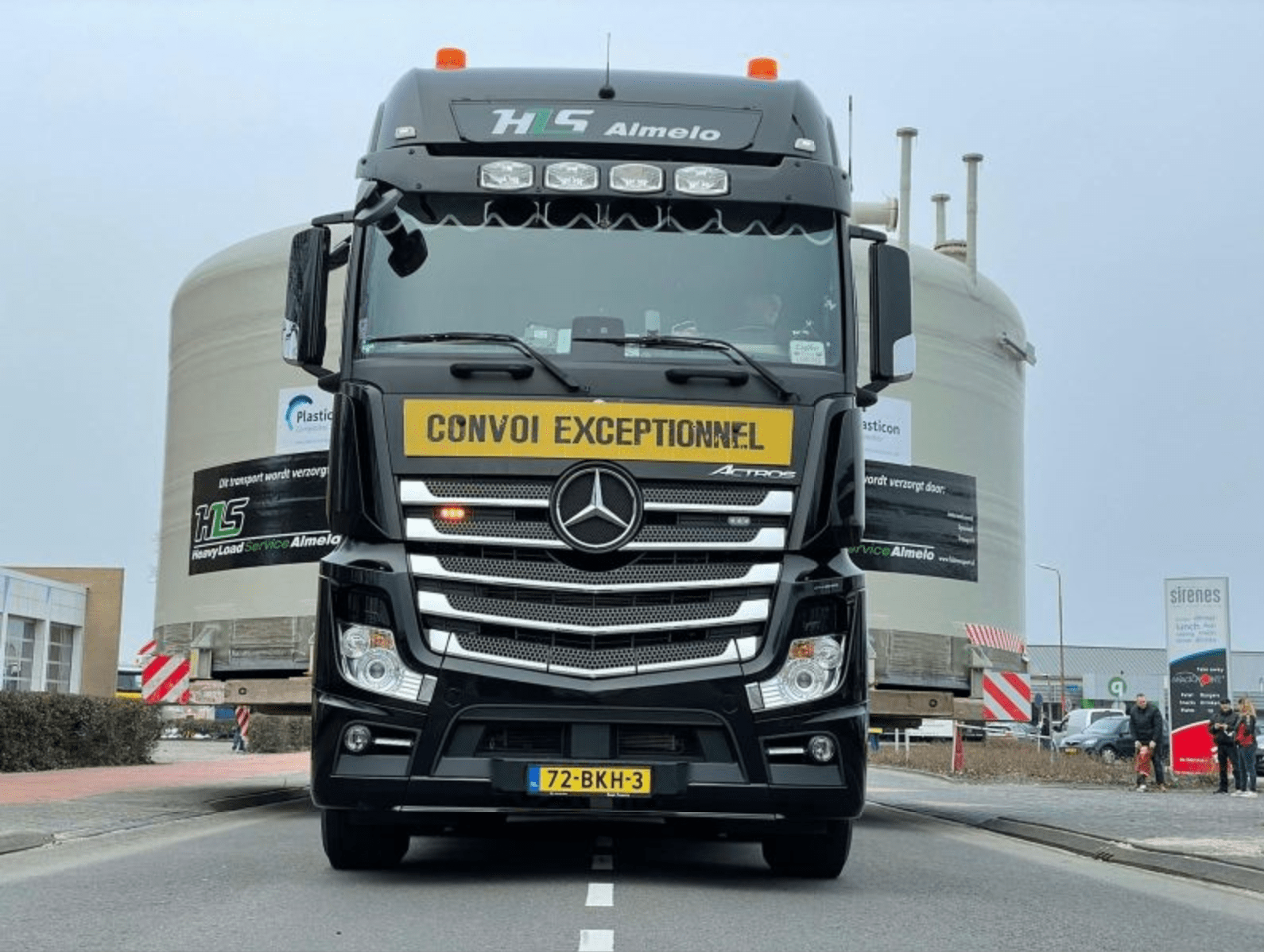

On Saturday 27 February, a 600 m3 industrial tank was transported to Teijin Aramids production location in Emmen. The XXL transport is part of Teijin Aramids ongoing efforts to produce more sustainably while meeting global demand for their aramids.
Meeting global demand for high-performance aramids
Installing the new equipment is the last step in a multi-year program designed to increase both production capacity and sustainability at Teijin Aramid locations. The company is expecting to complete the program by mid-2022 when it will have expanded its capacity by 25%.
After a decline early 2020 due to the global pandemic, Teijin Aramid is seeing an increased demand for their lightweight, strong and durable aramids , as well as for more sustainable solutions. Peter ter Horst: “Our purpose is to create materials that enable our partners to go beyond performance and that realize a sustainable future. By constantly improving our operations we continue to meet society’s needs today, without compromising the future”.
Long-term sustainable investment in the Netherlands
The move also signals Teijin Aramids commitment to aramid manufacturing in the Netherlands. “Sustainable production is the long-term answer for any industrial company” says Peter ter Horst. “I’m proud to see that we are leading the aramid industry in long-term sustainable thinking and investing. Thanks to moves like this we can assure our customers all over the world of our capacity to support their future requirements. At the same time, we continue to add value to the local economy.
Challenging operation
Moving the 600 m3 tank over this distance involves both roads and waterways. Transport from Hengelo to Drachten was via a barge. In Drachten, the tank was transferred onto a trailer for the final leg to Emmen. The tank is transported in two halves, each with a diameter of 9,5 meters and a height of 6 meter. The transport took place under the guidance of several pilot cars who operated under supervision of the police to minimize inconvenience to local traffic.